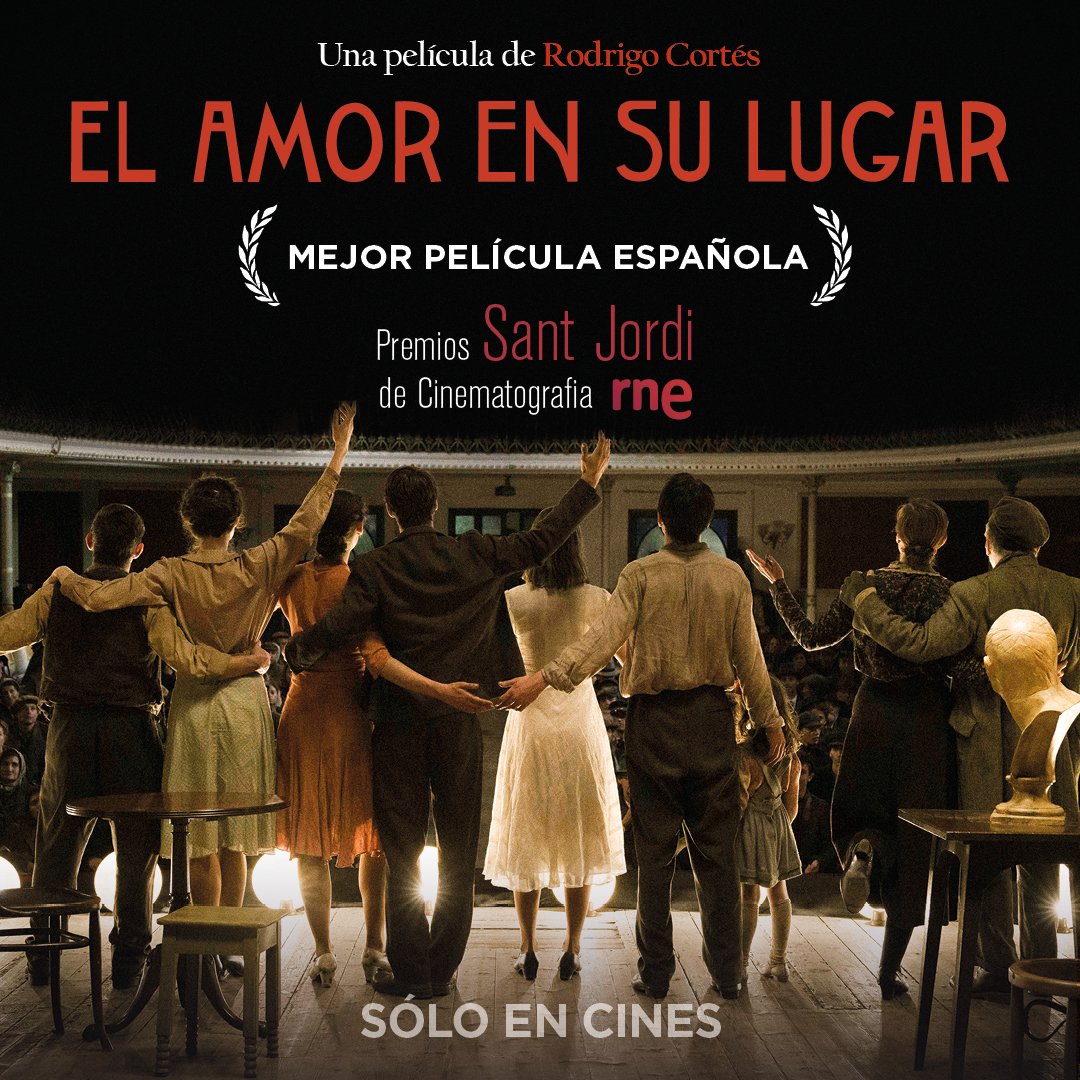
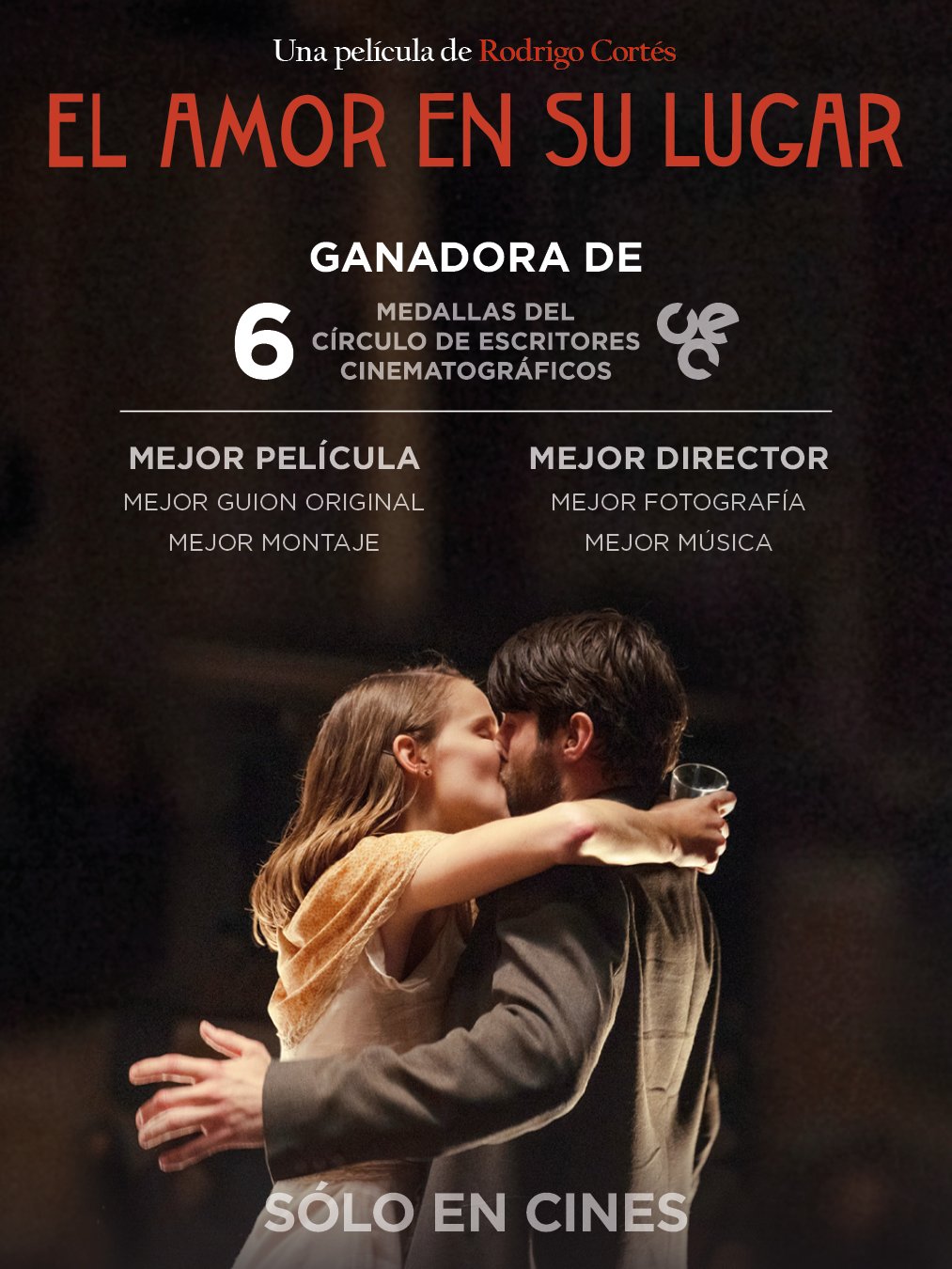
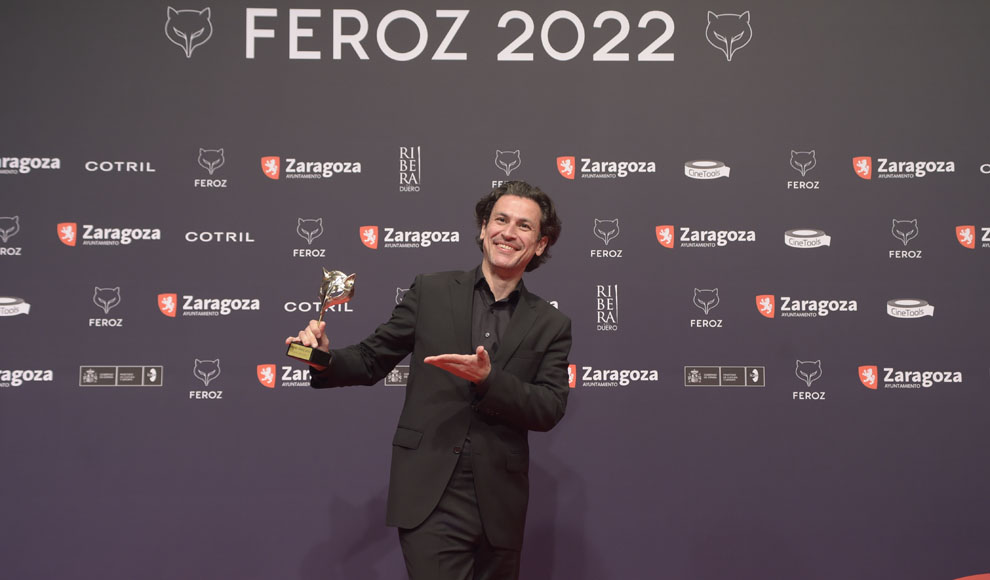
Después de ser prácticamente ignorada por los Goya (con tan solo 2 nominaciones: Mejor diseño de vestuario y Mejor dirección de producción) ––ojalá que se lleve los dos Goya pasado mañana–, Love Gets a Room consigue la valoración que se merece al ganar el Premio Feroz a la Mejor Dirección (Rodrigo Cortés), el Premio Sant Jordi (Mejor película española) y arrasando con 6 Medallas CEC (Mejor película, Mejor director, Mejor guion original, Mejor fotografía, Mejor música y Mejor montaje). Bravo y olé.
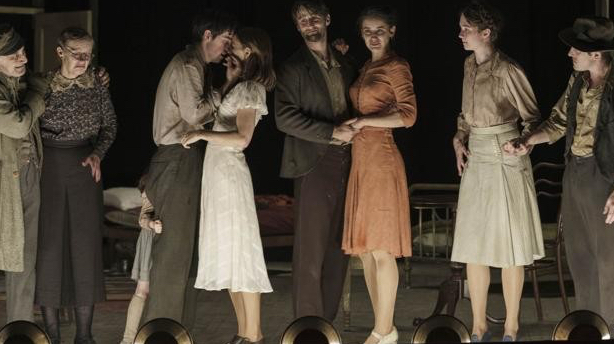
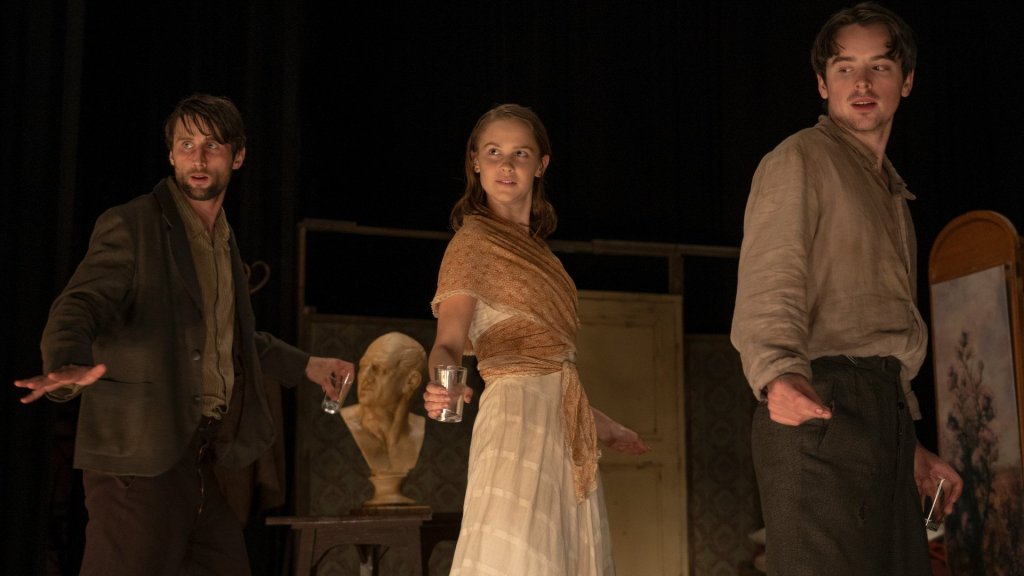
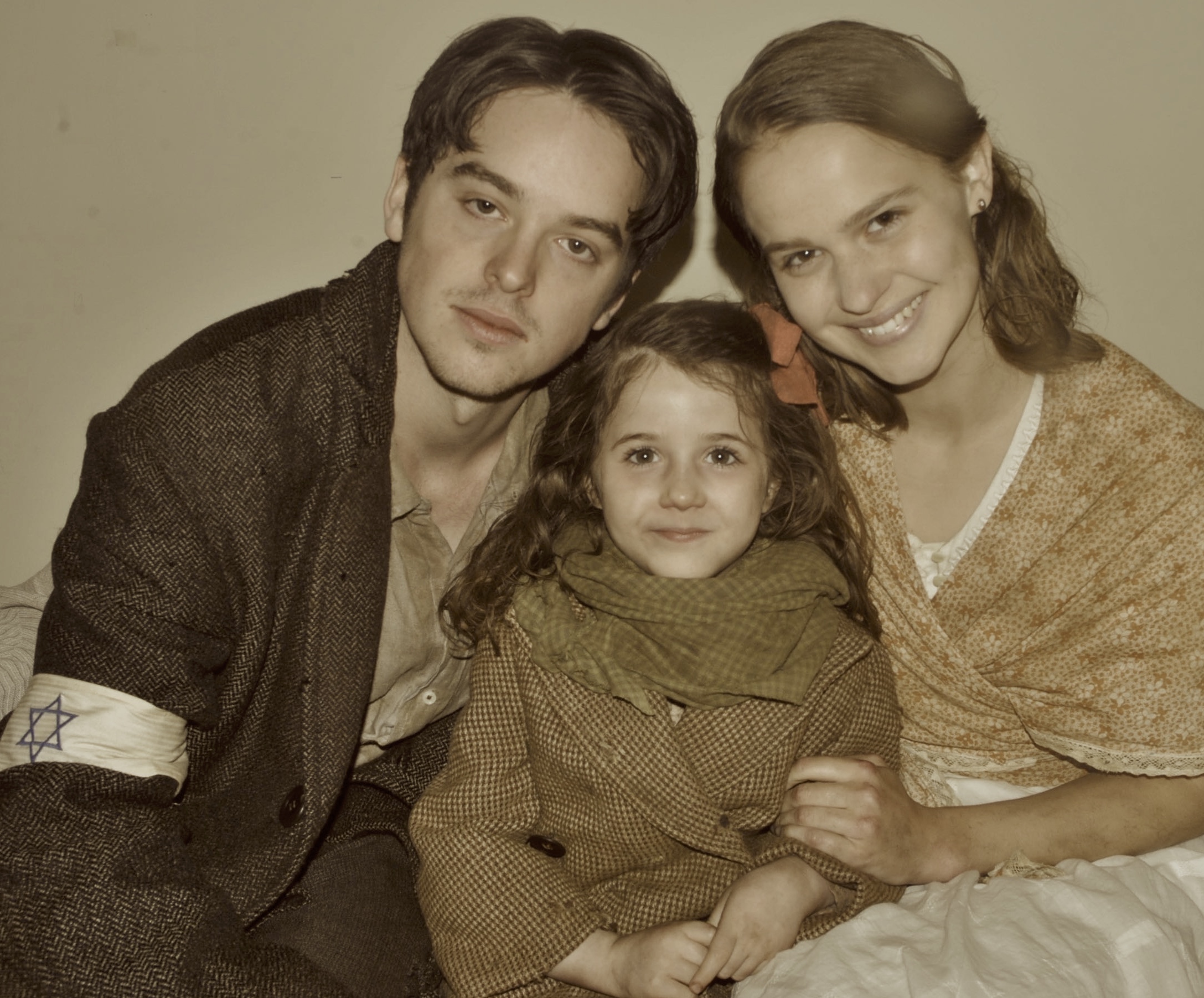
Love Gets a Room es una obra maestra sobre el amor, el arte, el antisemitismo, el coraje, la generosidad y la belleza. Una verdadera joya que hace trizas el corazón, hace reír, llorar y cantar. Escrita por el multifacético y genial Rodrigo Cortés (quien también ha compuesto la música de la preciosa canción Little Birdie, interpretada con una dulzura indescriptible por nuestra pequeña Dalit) y por David Safier, y dirigida por Rodrigo, la película se sitúa en el gueto de Varsovia en enero de 1942 (seis meses antes de las macabras deportaciones hacia los campos de exterminio, principalmente Treblinka –Große Aktion).
Love Gets a Room contiene una obra de teatro histórica dentro de la película: fragmentos (originalmente escritos en polaco, traducidos al inglés) de la obra de Jerzy Jurandot Miłość szuka mieszkania, que se estrenó en el Teatro Femina del gueto de Varsovia bien el 29 de octubre de 1941 (según la superviviente Mary Berg, The Diary of Mary Berg. Growing Up in the Warsaw Ghetto, pp. 101–102) o bien el 16 de enero de 1942 (según Barbara Engelking y Jacek Leociak, The Warsaw Ghetto: A Guide to the Perished City).
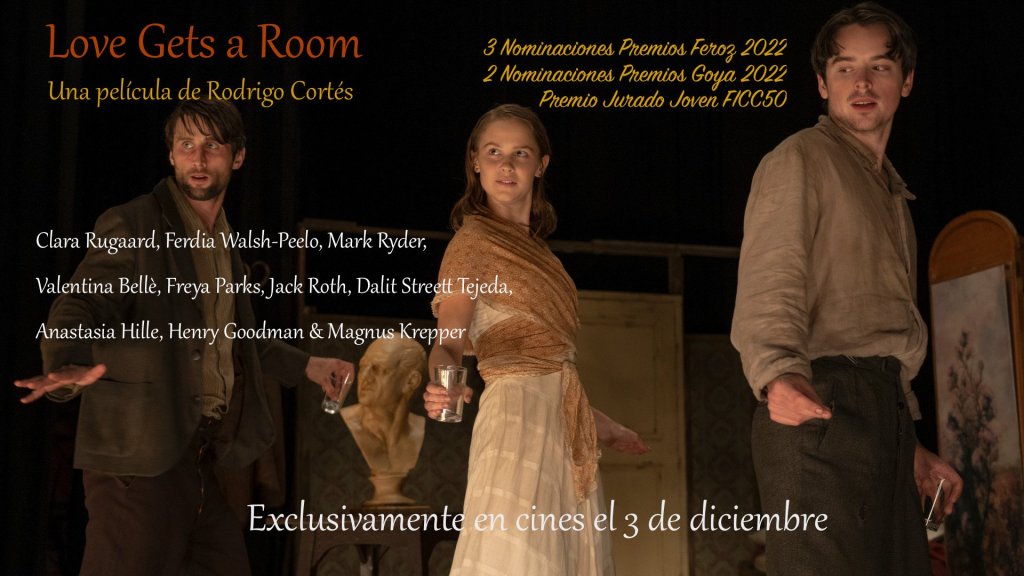
La cinematografía (Rafael García) de Love Gets a Room y la música (Víctor Reyes) son realmente maravillosas. El reparto es absolutamente magnífico y excelente: Clara Rugaard, Ferdia Walsh-Peelo, Henry Goodman, Anastasia Hille, Valentina Bellè, Mark Ryder, Freya Parks, Jack Roth, Magnus Krepper y nuestra preciosa y talentosa Dalit interpretando a la pequeña Sarah.
Love Gets a Room es una película necesaria, bella, conmovedora, profunda e imprescindible: un homenaje al arte, a la valentía, al amor y a las víctimas del Holocausto, quienes sufrieron el horror más inimaginable y perecieron bajo las condiciones más espeluznantes. Sin duda alguna, esta joya pasará a la posteridad y será recordada como una de las películas más emotivas y preciosas de la historia del cine.
10/10. Imprescindible verla en versión original: inglés –con un poco de alemán, yidish y el lema de Hashomer Hatzair
[הַשׁוֹמֵר הַצָעִיר] "Hazak ve'ematz" [חזק ואמץ] gritado en hebreo.
Antonia Tejeda Barros, Madrid, 10 de febrero de 2022
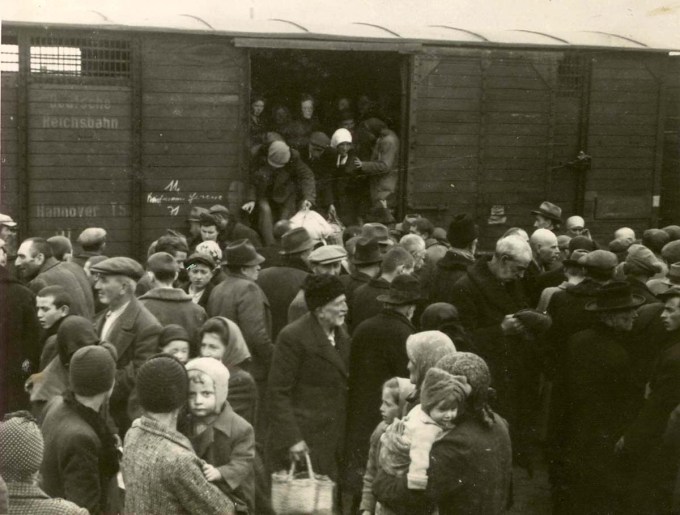
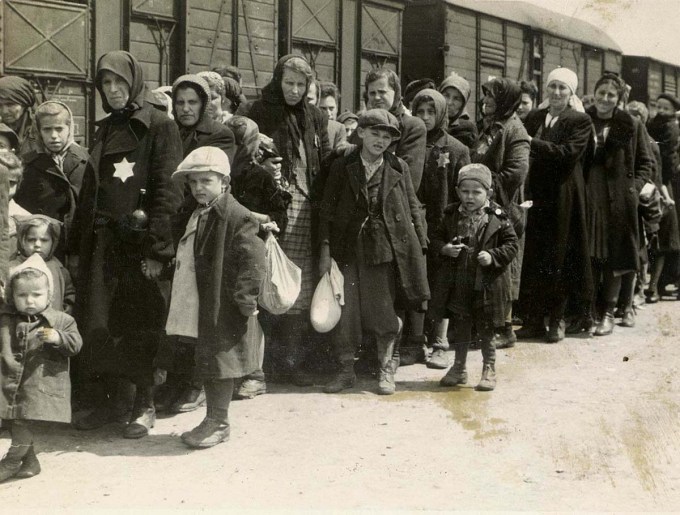
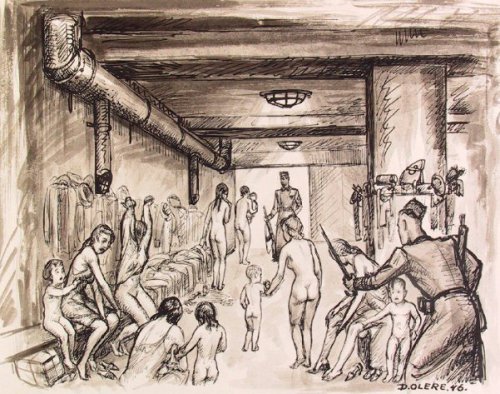
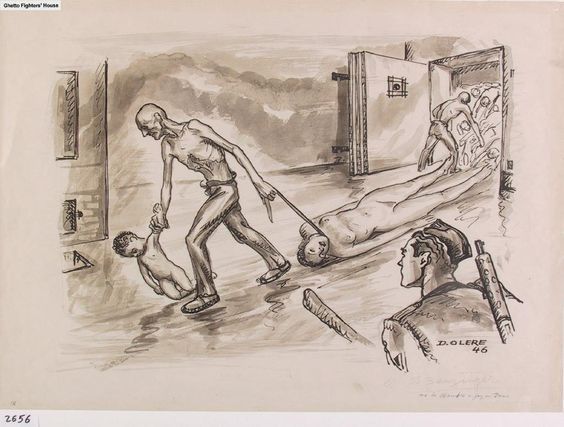
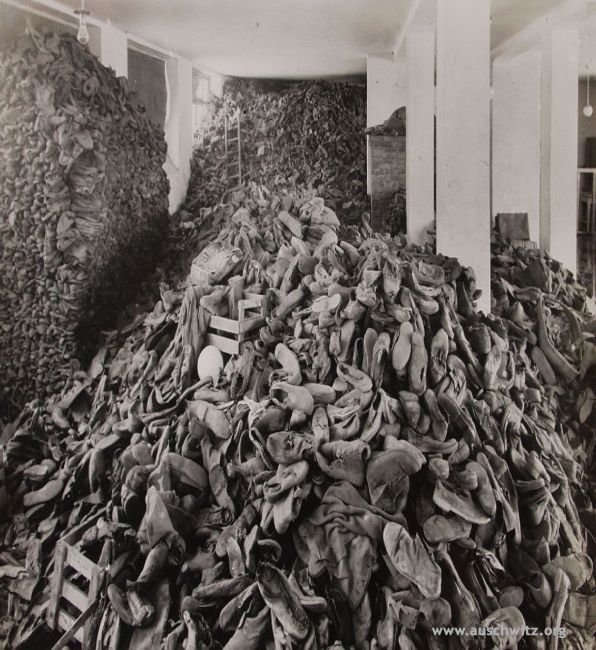
Judenstern, 1942–1945. USHMMA Jewish mother hugging her little daughter while an Ordnungspolizei (Orpo) shoots them both in the head. Ivangorod’s massacre, Ukraine, 1942. Yad VashemJewish men and women captured during the Warsaw ghetto uprising. April 19–May 16, 1943. USHMMJewish families surrendering to the German murderers. Warsaw ghetto uprising, April 19–May 16, 1943. Probably the most famous photo of the Warsaw ghetto uprising. The little girl on the left was Hanka Lamet. The little boy in the front has been identified as Arthur Domb Semiontek, Israel Rondel, Tsvi Nussbaum or Levi Zeilinwarger. USHMMTwo little Lithuanian Jewish boys: Emanuel Rosenthal (2 years old) and Avram Rosenthal (5 years old) in the Kovno ghetto, 1944. They were deported to Majdanek and gassed upon arrival. USHMMSuitcases of Jewish victims massacred and gassed. Majdanek. Yad VashemShoes of Jewish victims massacred and gassed. Majdanek. Yad VashemThe Gate of Death, entrance to Auschwitz-Birkenau. Stanisław Mucha. Auschwitz-Birkenau State MuseumGas pellets of Zyklon B. Loboda, 1968. Auschwitz-Birkenau State MuseumArrival of a transport of Hungarian Jewish men, women and children. Auschwitz-Birkenau, May-June 1944. On the side of the train is written “Deutsche Reichsbahn”. The Auschwitz Album. Yad VashemHungarian Jewish men, women and children arriving at Auschwitz-Birkenau, May-June 1944. The Auschwitz Album. Yad VashemHungarian Jewish women and children at the Judenrampe, just before selection. Auschwitz-Birkenau, May-June 1944. The Auschwitz Album. Yad VashemAn old Hungarian Jewish woman carrying a baby in her arms and three other Jewish children walking towards the gas chamber. Auschwitz-Birkenau, May-June 1944. The Auschwitz Album. Yad VashemHungarian Jewish women and children waiting for their “turn” to the gas chamber (grove closest to the crematorium). Auschwitz-Birkenau, May-June 1944. The Auschwitz Album. Yad VashemDavid Olère. Dans la salle de déshabillage, 1946. Guetto Fighter’s House MuseumDavid Olère. Après le gazage, 1946. Guetto Fighter’s House MuseumHair from the victims of Auschwitz. After the liberation. Auschwitz, 1945. USHMMGlasses from the victims of Auschwitz. After the liberation. Auschwitz, 1945. USHMMShoes from the victims of Auschwitz. After the liberation. Auschwitz, 1945. Auschwitz-Birkenau State MuseumBaby survivor tattooed. Auschwitz, 1945. Auschwitz-Birkenau State MuseumChildren survivors. After the liberation. Auschwitz, 1945. Auschwitz-Birkenau State Museum
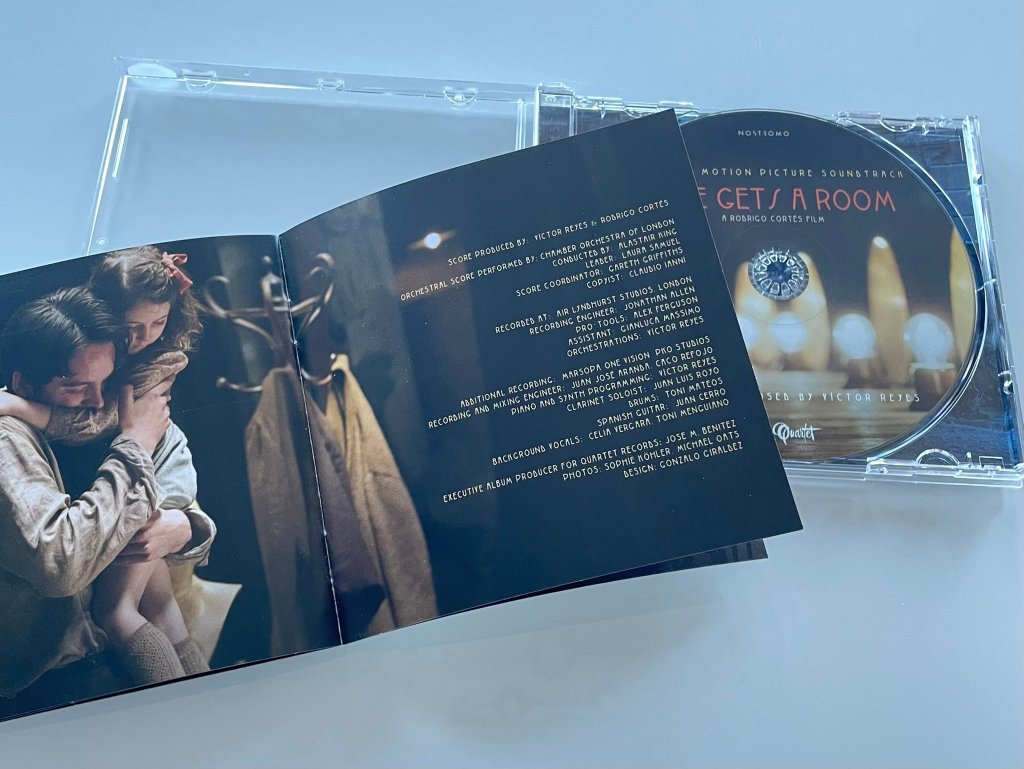
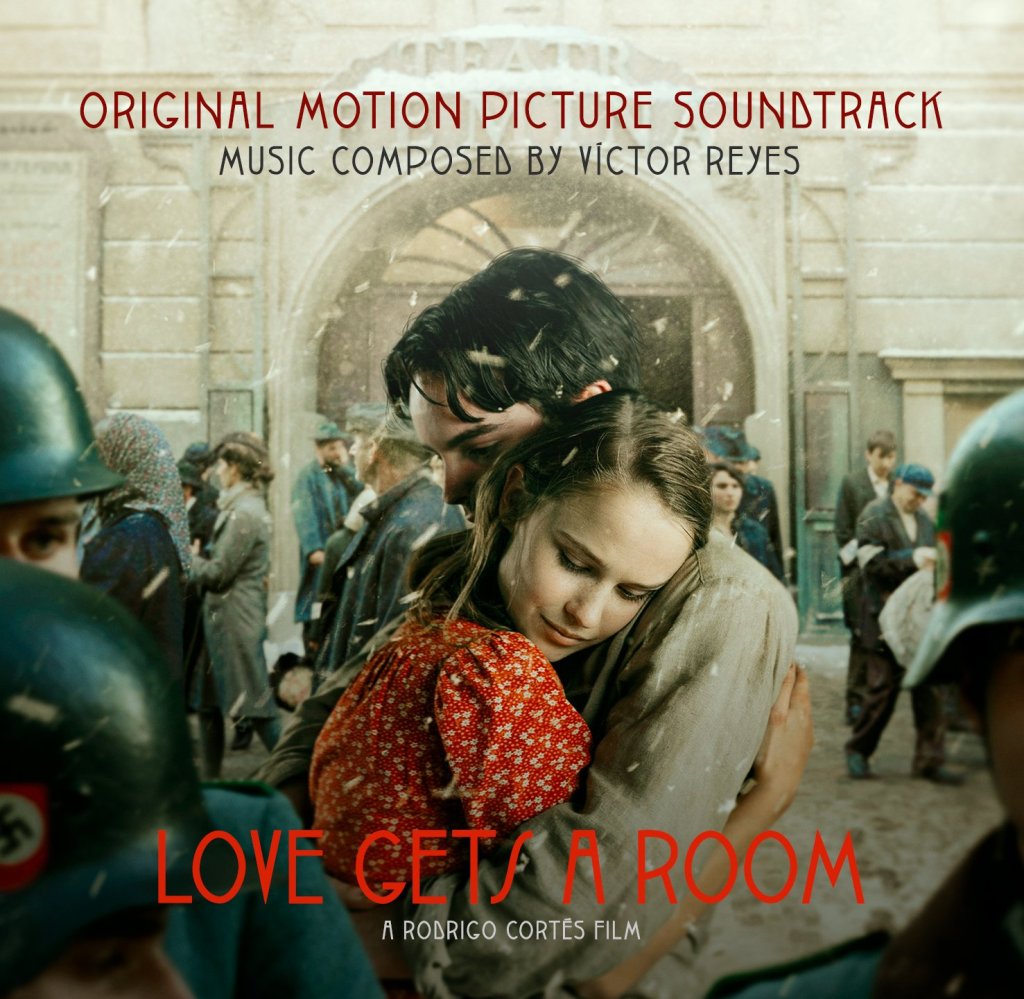
The soundtrack of Love Gets a Room is out! A beautiful and exquisite CD with the original lyrics (translated into English) from the songs of Jerzy Jurandot’s play Miłość szuka mieszkania (a musical comedy which was performed at the Femina Theatre in the Warsaw ghetto in 1941/42) and also with lyrics by Rodrigo Cortés, and with music by Víctor Reyes and Rodrigo Cortés.
Released by Quartet Records. Limited edition. Beautifully performed by the Chamber Orchestra of London (Alastair King, Laura Samuel), and with Juan Luis Royo, Toni Mateos, Juan Cerro, Celia Vergara and Toni Menguiano, and gorgeously sung by Clara Rugaard, Ferdia Walsh-Peelo, Mark Ryder, Valentina Bellè, Henry Goodman, and our wonderful little Dalit Streett Tejeda. Marvellous, raw, fresh, stunning, and breathtaking. Bravo to all.
Love Gets a Room is a masterpiece about love, art, antisemitism, bravery, generosity, and beauty. A jewel that will make you weep, laugh, sing, and cry. Written by Rodrigo Cortés & David Safier and directed by Rodrigo, the movie is set at the Warsaw ghetto in January 1942 (six months before the deportations to the extermination camps, mainly Treblinka –Große Aktion).
Love Gets a Room includes a play inside the movie: excerpts (originally written in Polish, translated into English) of Jerzy Jurandot’s play Miłość szuka mieszkania, which premiered at the Femina Theatre in the Warsaw ghetto either on October 29, 1941 (according to Holocaust survivor Mary Berg, see The Diary of Mary Berg. Growing Up in the Warsaw Ghetto, pp. 101–102) or on January 16, 1942 (see Barbara Engelking & Jacek Leociak, The Warsaw Ghetto: A Guide to the Perished City).
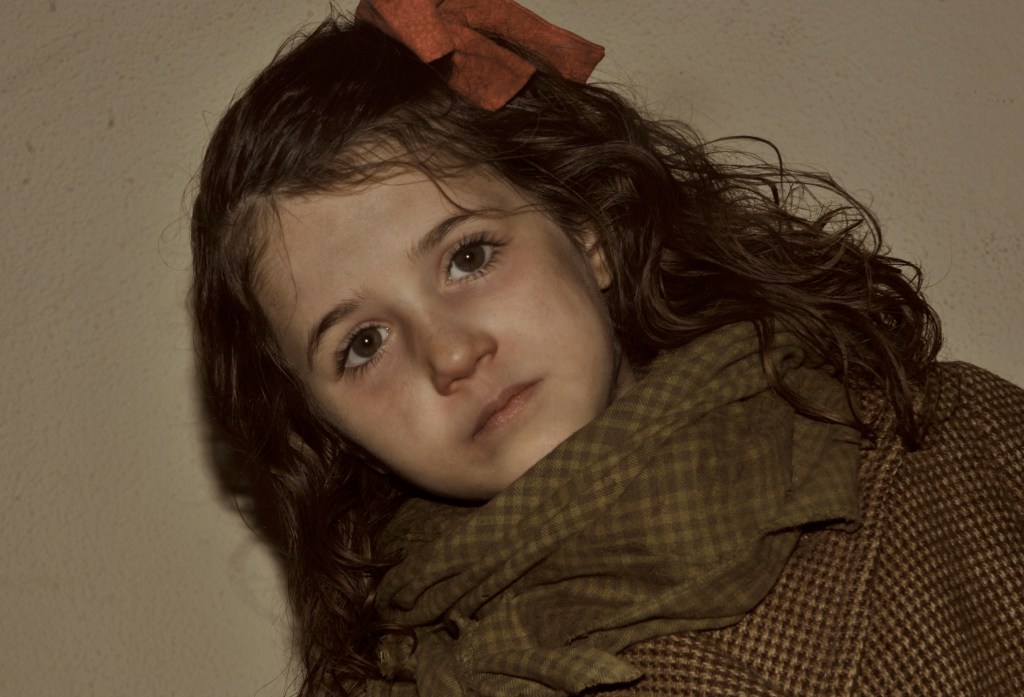
The cinematography (Rafael García) of Love Gets a Room and the music (Víctor Reyes) will take your breath away. The cast is absolutely superb: Clara Rugaard, Ferdia Walsh-Peelo, Henry Goodman, Anastasia Hille, Valentina Bellè, Mark Ryder, Freya Parks, Jack Roth, Magnus Krepper and our beautiful, amazing and talented Dalit as little Sarah. Bravo to all!
Love Gets a Room is a homage to the power of art, to all the victims who perished in the Holocaust, to bravery and to love.
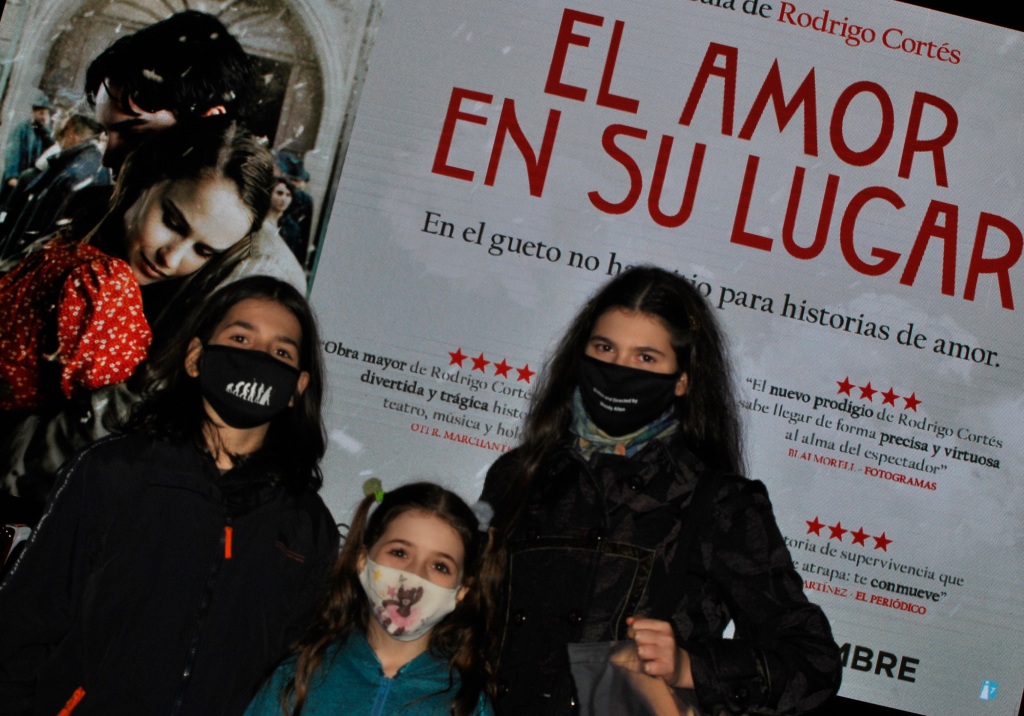
On Thursday we are going to Sevilla to finally see Love Gets a Room! A film about survival and love written by Rodrigo Cortés & David Safier, directed by Rodrigo, set at the Warsaw ghetto in January 1942 (six months before the deportations to the extermination camps, mainly Treblinka –Große Aktion), and shot in Spain in the summer of 2019.
Love Gets a Room includes a play inside the movie: excerpts (originally written in Polish, translated into English) of Jerzy Jurandot’s play Miłość szuka mieszkania, which premiered at the Femina Theatre in the Warsaw ghetto either on October 29, 1941 (according to Holocaust survivor Mary Berg, see The Diary of Mary Berg. Growing Up in the Warsaw Ghetto, pp. 101-102) or on January 16, 1942 (see Barbara Engelking & Jacek Leociak, The Warsaw Ghetto: A Guide to the Perished City). Jurandot was a Polish-Jewish writer and composer who was very active in the cultural life of the ghetto; he survived the Holocaust.
With a stellar cast (Clara Rugaard, Ferdia Walsh-Peelo, Henry Goodman, Anastasia Hille, Valentina Bellè, Mark Ryder, Freya Parks, Jack Roth, Magnus Krepper) and our little, beautiful, amazing and talented Dalit. Bravo to all!
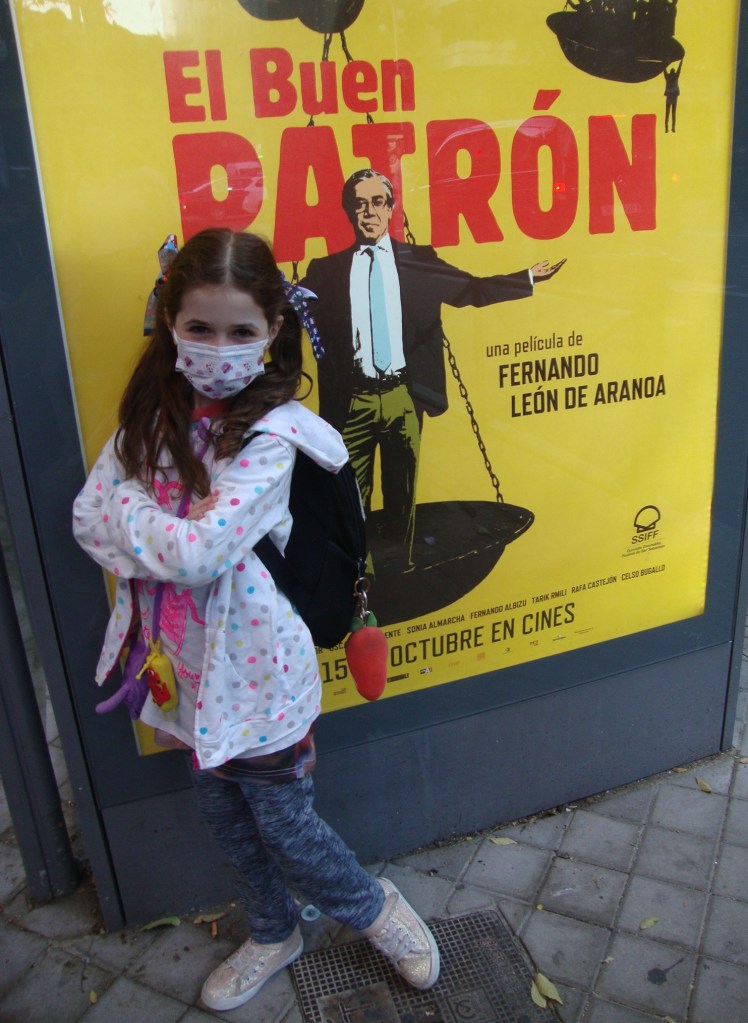
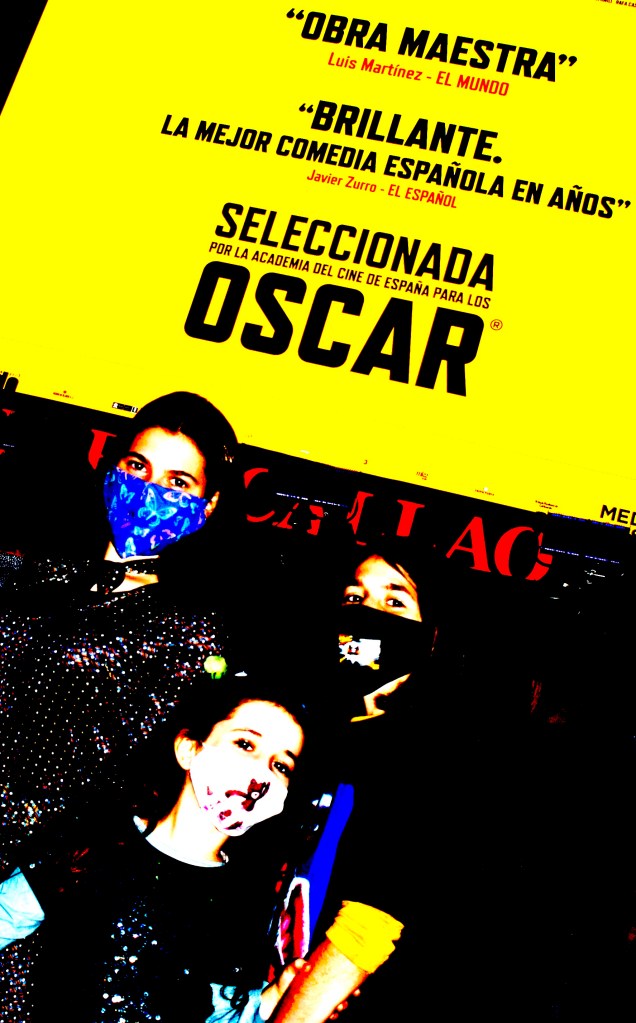
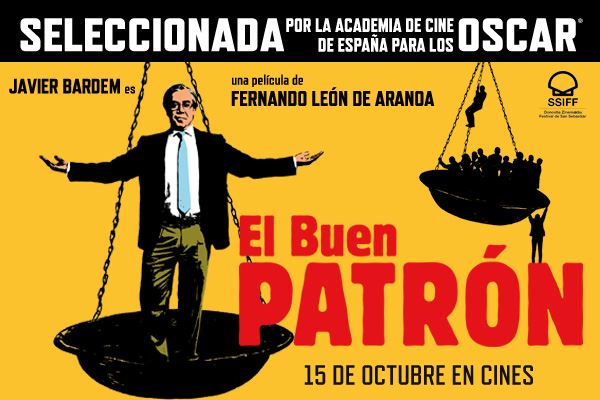
El buen patrón es una tragicomedia sarcástica, exquisita, feroz y humana que habla sobre el poder, el trabajo, la sumisión, la infidelidad, la dignidad, las relaciones humanas, la injusticia y el equilibrio. Brillantemente escrita y dirigida por el genial Fernando León de Aranoa, con una interpretación magistral del titán camaleónico Javier Bardem, un reparto de lujo y excelente música de Zeltia Montes, El buen patrón hace reír, llorar y reflexionar sobre el equilibrio y desequilibrio de la vida laboral, el matrimonio, el desengaño, la amistad y el poder. 10/10.
Antonia Tejeda Barros,
Madrid, 16 de octubre de 2021
Solo faltan 4 días para el estreno. El 15 de octubre en cines. Escrita y dirigida por el brillante y genial Fernando León de Aranoa. Con un camaleónico Javier Bardem y un reparto de lujo.
¡Un súper bravo para Óscar, Nico y Dalit!
Antonia Tejeda Barros,
Madrid, 11 de octubre de 2021

















 Antonia Tejeda Barros